


The 14-day Japanese diet is a way to regain weight and a slim body without breaking the fast.The approach to product selection is special.The number of calories and compatibility of components are taken into account.Fat cells disappear quickly.During the period of compliance with restrictions, you can lose 5-10 kg.
Japanese diet for 14 days: principles that influence the process of losing weight
The principle of losing weight consists of 3 indicators:
- low calorie content;
- the presence of protein components in the diet;
- lack of salt in ready meals.
Weight loss is triggered by an accelerated metabolic process.Protein increases heat production in the body.Cells and tissues are freed from excess fluid.This happens due to the limitation or absence of salt in food.In addition, it is possible to eliminate edema and normalize blood pressure levels, taking into account age.At least calories enter the body.That quantity is enough to maintain good health.To add energy, the existing own reserves are used and activated.
features:
- Digesting protein foods requires energy.Fat cells are used for their formation (burning process).
- Suitable for people of different weight.
- In 7 days it takes up to 5 kg.
- Fats and carbohydrates are there.
If there are no health problems and no contraindications, you can continue the diet for up to 30 days.The Japanese menu is designed taking into account the fact that at least 100 different products will appear on the table in a week.
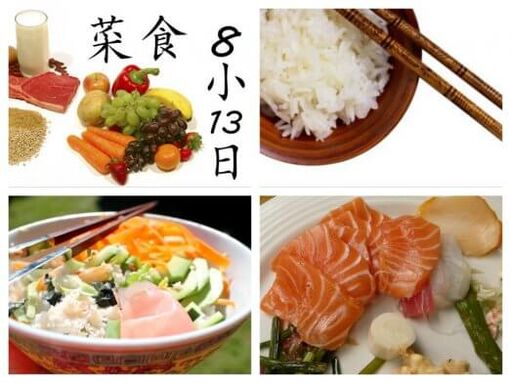
The diet is strict.Early psychological adjustment allows you to avoid unnecessary emotional stress.Experts recommend repeating the weight loss method no more than 2 times a year.
Additional effects provided the rules are followed: the achieved results last for a long time.To do this, you need to exit the diet correctly (a sudden increase in the calorie content of food is not allowed).You need to give up these methods of losing weight and keeping it off:
- pregnant women;
- breastfeeding mothers;
- people with liver disease of varying severity;
- if there is kidney pathology;
- for diseases of the gastrointestinal tract and stomach - gastritis and ulcers.
Limits are also imposed by disorders in the field of cardiology.It is recommended to consult a doctor before starting a diet.
The main principles of effective nutritional nutrition
The Japanese diet for a full 2 weeks has several principles, adherence to which will increase its effectiveness.During the 15 years of existence, the following were distinguished:
- Complete absence of salt (even 2-3 g per day is not allowed).
- Reduce the intake of carbohydrates in the diet.
- The diet consists of a variety of foods.
- Daily food - 3.
- Liquid bamount.
- Age criteria - 18-40 years.
- Suitable for men and women.
Here are the rules to follow the diet:
- 90% of the liquid is pure water;
- Boiled and boiled fish in a plate.Moderate frying is also allowed;
- There are no restrictions on grains, but it is recommended that rice and legumes predominate;
- vegetables, including cabbage, should be included in the menu;
- simple carbohydrates are completely excluded;
- Sugar-free kefir is allowed in the morning (for breakfast).
You cannot change the menu yourself from day to day.The preferred meat is beef.Chicken is allowed.Do not use the skin when cooking.The basis of nutritional nutrition is to reduce the number of daily calories.Snacks are not allowed.You have to give up:
- salt (fresh food helps to get rid of the excess amount faster);
- smoked meat;
- fatty foods;
- prepared foods;
- fast food;
- juice;
- alcoholic beverages;
- fast food and chips.
Compliance with the basic principles allows you to speed up metabolic processes in the body.Fat deposits will quickly disappear and be converted into energy.The nutrition program includes:
- eggs;
- coffee (freeze-dried is not suitable);
- green tea;
- chicory;
- dairy products;
- lean meat (rabbit, chicken).
Vegetables are eaten in small quantities.The amount of fluid should not be less than 2 liters per day.
Proper nutrition in the Japanese diet is built in two directions.Excess fat and volume are taken into account.If they are small, then it is better to choose 7 days.Serious overkill requires an increase to 14 days.The main principles of nutrition during this period include:

- Ban on the use of alternative food products (beef cannot be replaced with pork).
- Permission to use tomato juice instead of fresh tomatoes.
- Elimination of sugar and flour in any form.
Entry and exit from the diet should be smooth.Features: weight loss results will be less noticeable if there are other diet restrictions before the Japanese diet.It is recommended to spend a fasting day the day before starting a diet with a regular diet.Several options are allowed: use kefir or apples, eat boiled meat with fresh or boiled vegetables.Coming off the diet should be smooth.New products should be introduced gradually.It is recommended to include 1-2 species per week in your diet.The absence of salt in the dish will help remove excess fluid from tissues and cells.It accounts for up to 30% of volume and excess weight.The selected strict restriction period cannot be exceeded.You can not rearrange the day and the menu is arranged for breakfast, lunch and dinner.
The pros and cons of the Japanese diet
Dietary nutrition according to the Japanese system has several advantages and disadvantages.They should be taken into account before starting a diet.Among the advantages are:
- reducing the amount of salt in the diet leads to a reduction in the risk of developing heart and vascular diseases;
- the ability to choose the duration of the diet - 7 or 14 days;
- kg lost and the volume will not return if the entry and exit from the diet is done correctly;
- the set of foods in the diet is available to everyone (there are no unusual or exotic dishes);
- absence of edema or getting rid of it;
- the presence of protein substances does not lead to sagging skin or the appearance of stretch marks in areas where the fat layer is reduced;
- there are no strict restrictions on cooking (food can be boiled, put in a water bath, boiled, fried in vegetable oil);
- vitamins and microelements enter the body with plant and vegetable components.
14 days is the period considered optimal for weight loss.The body does not experience pressure.Mood and vitality do not decrease.Stamina and mental activity remain at a high level.Performance indicators do not fall.
Disadvantages of the Japanese diet:
- This system should not be used for gastrointestinal diseases.
- The number of meals is limited to 3 (healthy eating involves 5-6 meals in small portions).
- There are age restrictions (the diet is not suitable for older people).
There are contraindications to complying with restrictions under the Japanese system.You should not start it yourself without first consulting a doctor.
Forbidden foods for the Japanese diet
The Japanese diet for 7 or 14 days contains a list of foods that must be excluded from the menu.Do not use even in small quantities:
- salt (except in rare cases);
- preparation of homemade vegetables and fruits (pickles, pickles, jam);
- alcoholic beverages;
- carbonated drinks;
- juice;
- mineral water (because it contains gas);
- wheat flour;
- pastries and bread;
- semi-finished products;
- canned food (meat, fish and vegetables);
- confectionery products (sweets, lollipops, dragees, chocolates, biscuits, pastries, cakes);
- fatty meat;
- fatty fish;
- milk;
- cereals;
- sour cream;
- mayonnaise;
- bananas (fresh, mashed, dried);
- persimmon;
- grapes (all types and raisins);
- sugar (white, cane);
- seasoning;
- gel component;
- whipped cream;
- potatoes (and other starchy vegetables);
- sauce;
- seasoning;
- spices.
Honey and dishes containing it are prohibited.Sausages and sausages, boiled and smoked sausages, lard are not allowed to be eaten during this period.
Legal Products
The following products are allowed to be used for cooking:

- kefir;
- yogurt without additives (bio);
- rye crackers;
- tomato juice with pulp without salt (preferably homemade);
- cheese (hard, low-fat);
- sea fish;
- real coffee (without flavorings, cream and sugar);
- beef (boiled, boiled, steamed);
- chicken (boiled, steamed);
- eggs (quail, chicken) - they can be boiled, add cheese, cooking method - boiled;
- zucchini;
- eggplant (can be fried);
- parsnip root;
- apples (unsweetened, green variety);
- pears (unsweetened ones are recommended - for example, Chinese);
- citrus fruits (oranges, limes, grapefruits, tangerines);
- green tea (without additives);
- lemon juice;
- vegetable oil (sunflower and olive) - you need to choose unrefined;
- cherries 50 g each;
- kiwi (taking into account allergic reactions to the product);
- plums (only fresh, in small quantities);
- white cabbage;
- carrots (fresh, boiled, grated);
- rye bread;
Dishes consisting of meat, chicken or fish are served with side dishes.You need to include it in the menu every day.The difficulty is that you will not be able to "adapt" the taste to what you are used to.You cannot add spices, herbs or use other methods.Salt is also not added to the dish.You can't cook potatoes or kebabs fried in lard, but you can include steamed cuts and meatballs in your nutrition program.
Estimated grocery purchases for 2 weeks
For 2 weeks you can buy:
- chicken eggs - 20 pieces;
- chicken fillet or breast - 900 g;
- carrots - 3 kg;
- tomato juice without salt) - 2 l;
- natural ground or grain coffee - 1 package;
- white cabbage - 2-3 kg;
- fruits - 1 kg (to choose);
- lemon - 2-3 pcs.;
- fresh sea fish (whole carcass) - 2 kg;
- non-frozen fish fillet - 1 kg;
- hard, low-fat cheese - 200 g;
- watermelon - 2 kg;
- vegetable oil - 0.5-1 l;
- lean beef - 1 kg;
- green tea - 1 pack (without additives).
It is recommended to buy kefir and yogurt as needed to keep these products fresh.
Japanese diet for 14 days: menu, schedule
The nutrition program is based on a full menu with a certain amount of calories.Menb by day (for every 14):
| Diet day | breakfast | Have lunch | dinner |
| 1 | Coffee (200 ml) without sugar and milk or green tea with the same amount | Chicken eggs (boiled) - 2 pieces, white cabbage leaves steamed with vegetable oil (150 g), homemade tomato juice (200 ml) | Steamed or lightly fried fish without side dishes (200 g) |
| 2 | Original coffee, ground, roasted, without milk and sugar, rye bread (1 piece) | Boiled cabbage (or boiled in water with sunflower oil), fried or boiled fish, vegetable oil as dressing (200 g serving) | Steamed beef (sliced) or beef, chicken - optional (200 g), kefir (200 ml) |
| 3 | Toast made from rye flour or unsalted biscuits in the composition (1 piece) of the permitted drink (200 ml) | Zucchini, grated and fried until golden brown in vegetable oil (unrefined sunflower) (any quantity) | Vegetable casserole with yogurt (200 g). |
| 4 | Grated carrots with lemon juice | Whole fried or boiled fish (200 g), tomato juice (200 ml) | Sliced fruit (200 g), optional – fruit salad with lemon juice |
| 5 | Carrots with lemon juice | Boiled fish (fillet) and tomato juice (1 glass) | Various fresh fruits (total weight 200 g) whole fruits |
| 6 | Chicory drink (200 ml) | Boiled chicken fillet (500 g), finely chopped cabbage and carrot salad with vegetable oil sauce | Chicken eggs with a piece of cheese (2 pcs), fresh carrots, cut into pieces |
| 7 | Green tea (200 ml) without sweetener | Steamed beef, you can pound it first (200 g) | Roast beef (200 g), a glass of kefir |
| 8 | Original coffee-based drink (200 ml) | Boiled white chicken meat (200 g), in addition to "vitamin" chopped cabbage salad with vegetable oil (200 g) | Quail eggs with grated cheese topping - 2 pcs, fresh carrots - 1 pc |
The results achieved will last for 2-3 years.The average caloric value is 800-850 kcal.You need to drink extra water throughout the day.It is allowed, as an option, to repeat the menu after reaching the 8th day of the diet.
Quit the Japanese Diet
Diet restriction rules according to the Japanese method suggest the right way out.Suggestion:

- add portions gradually;
- develop a diet smoothly;
- maintain a balanced diet.
Cereals, salt and sweets should not be included in the menu immediately.
Various contraindications
This technique is not suitable for people who are under mental or physical stress.Children, pregnant women and the elderly should not use the diet.If less than 2 liters of fluid enters the body, dehydration may occur.If gastrointestinal disease is present, then the weight loss method cannot be used, because the menu is unbalanced.People with heart and vascular diseases should not comply with restrictions (increased amount of coffee).The wrong way out will cause rapid weight gain.
The most popular recipes for Japanese diet dishes Recipe for carrot salad: 1 carrot and 10 ml of vegetable oil.Preparation: Peel carrots, grate on a fine grater or cut into thin rings.Add oil, stir.Adding lemon juice (to taste) will help add some piquancy.
Baked eggplant and zucchini with cheese and yogurt: zucchini and eggplant (1 piece each), cheese (50 g), chicken eggs (2 pieces), natural yogurt without additives (200 ml).Preparation: Peel and rinse the vegetables.Cut into small pieces.Put in the form.Beat eggs and mix with yogurt.Pour the mixture over the vegetables.Grate the cheese and sprinkle over the dish.Bake for 40 minutes.Oven temperature - 150 degrees.
Fruit salad: green apple, pear, kiwi (1 piece each), tangerine (3 pieces for juice).Wash the fruit and cut into cubes.Squeeze the juice from the tangerine slices, sprinkle over the fruit, and mix.
The Japanese diet for 14 days gives excellent results if you follow the recommendations.The way out of it should be smooth.This is necessary so that the lost kg does not return.Repeated restrictions are allowed after consultation with a doctor and no more than 2 times a year.